

Wildlife of Ranthambore
Explore the incredible biodiversity of Ranthambore, home to majestic tigers, elusive leopards, vibrant birds, reptiles, and countless fascinating species that make every safari unforgettable.
MAMMALS
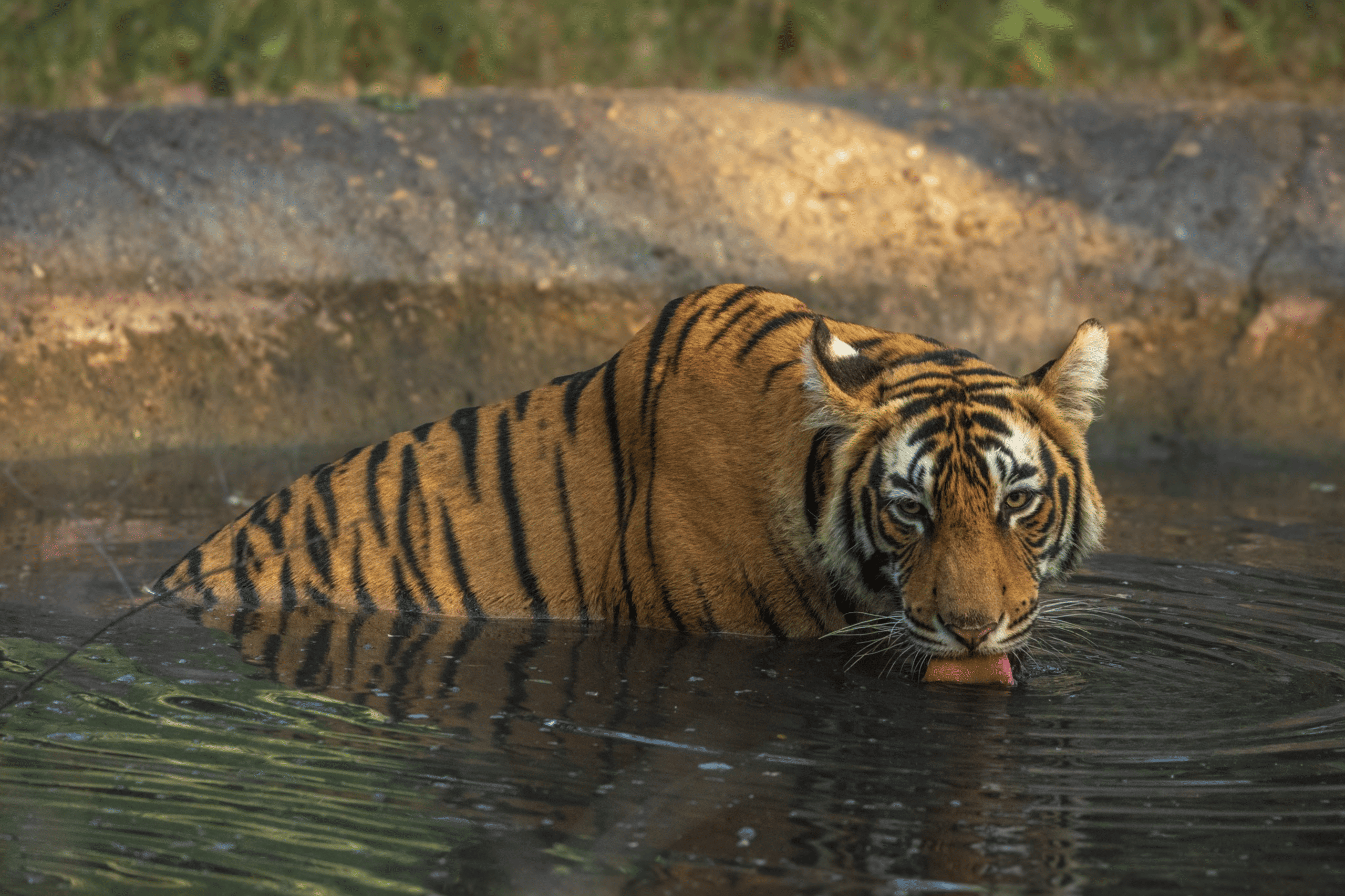
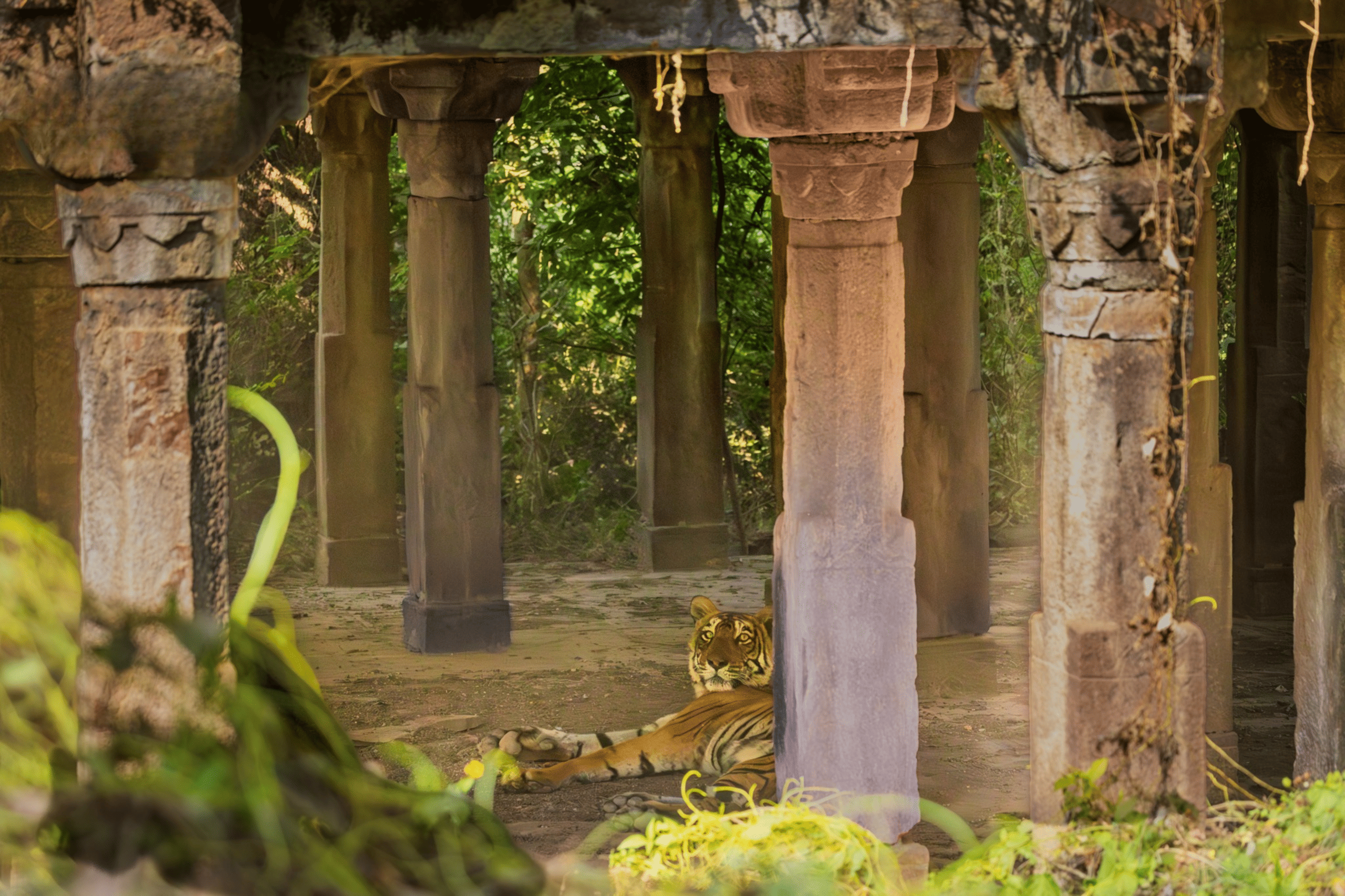
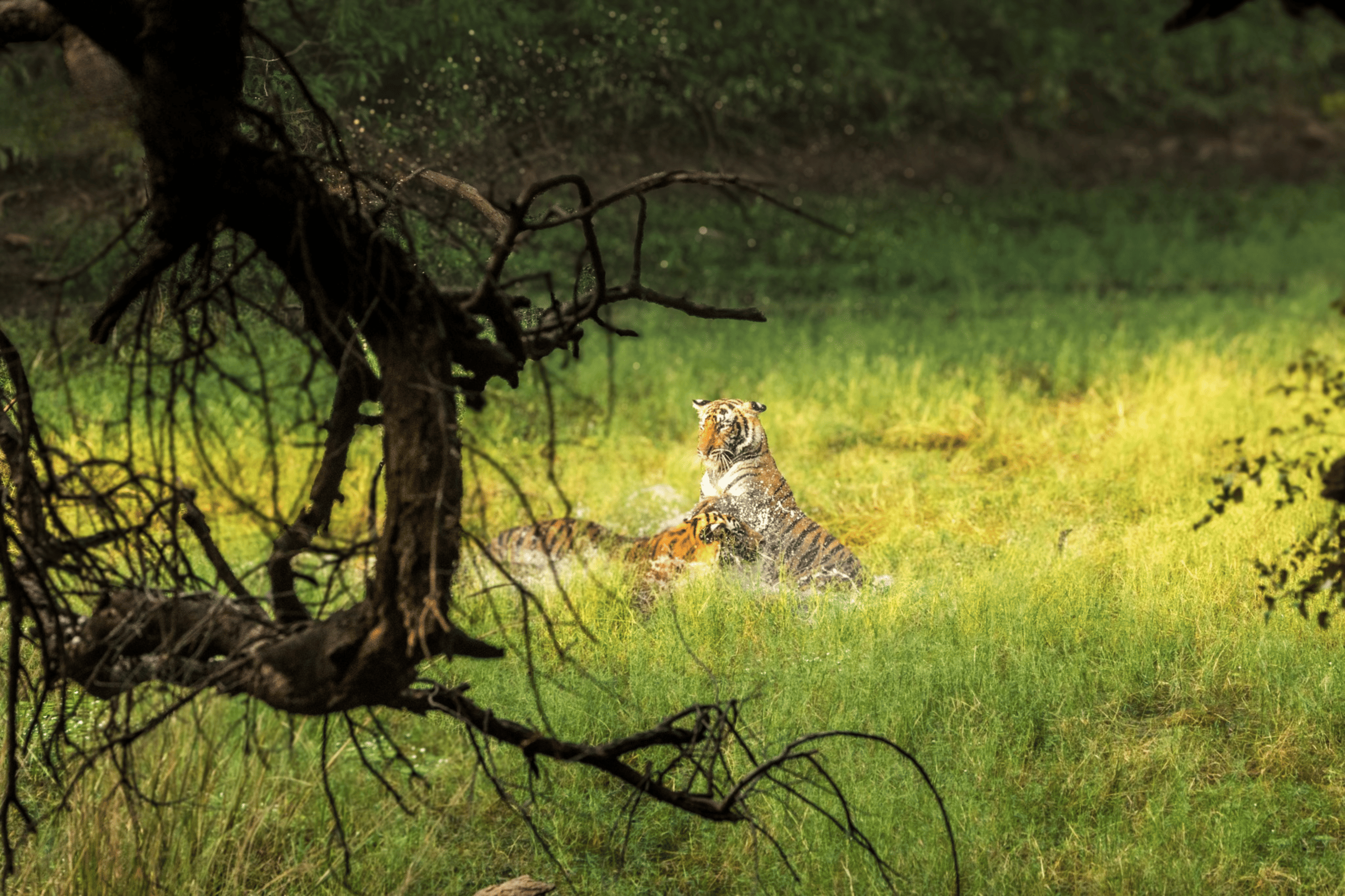
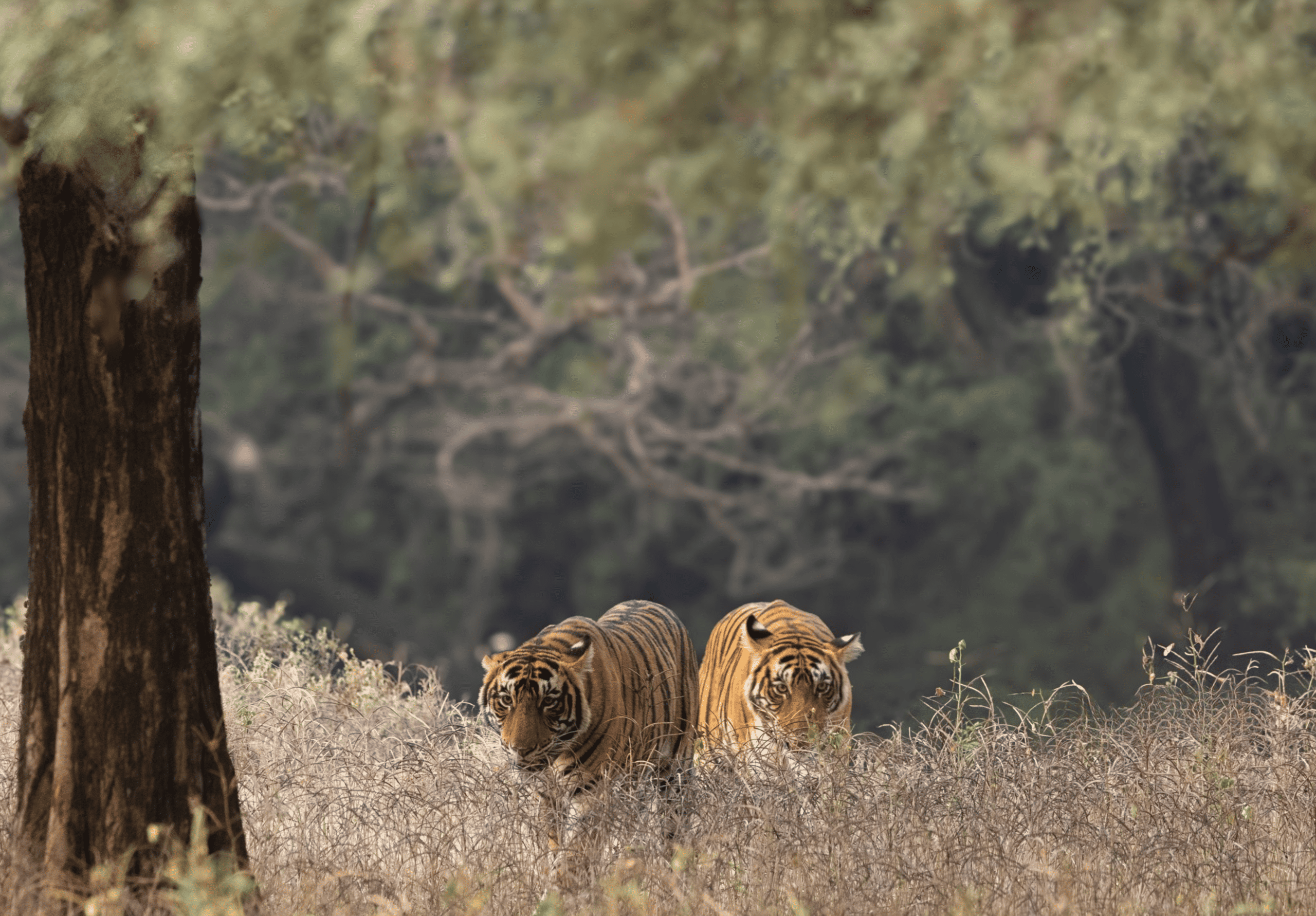
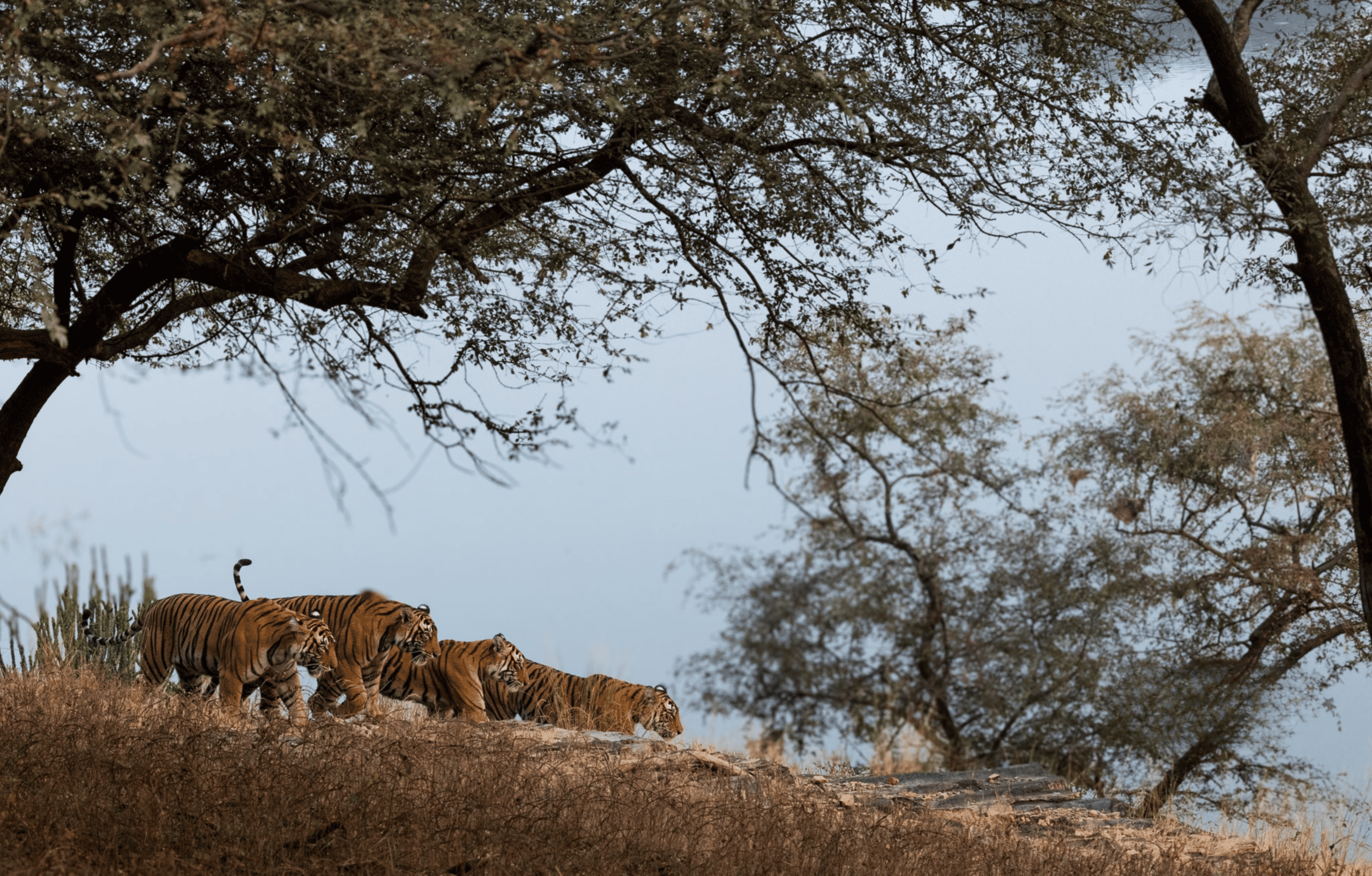
Ranthambore National Park supports one of India’s most complete large-mammal communities, anchored by the Bengal tiger at the top of the food chain. Sloth bears, leopards, and smaller cats share the forest with sizeable herds of deer and antelope, while jackals and hyenas fill the scavenger niche. This layered diversity among the animals of Ranthambore is central to the park’s reputation as one of Asia’s finest wildlife destinations.
Scientific Name: Panthera tigris tigris
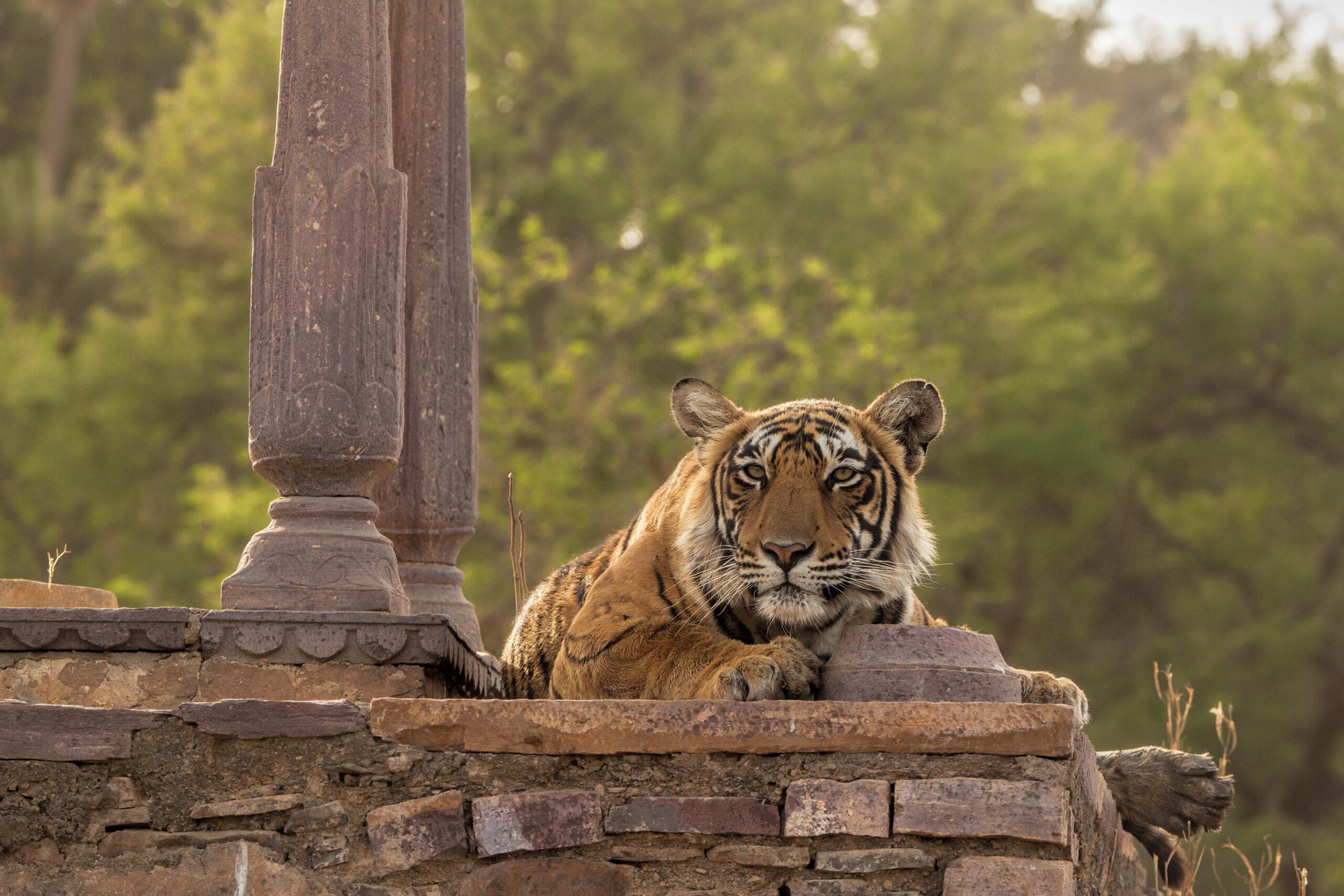
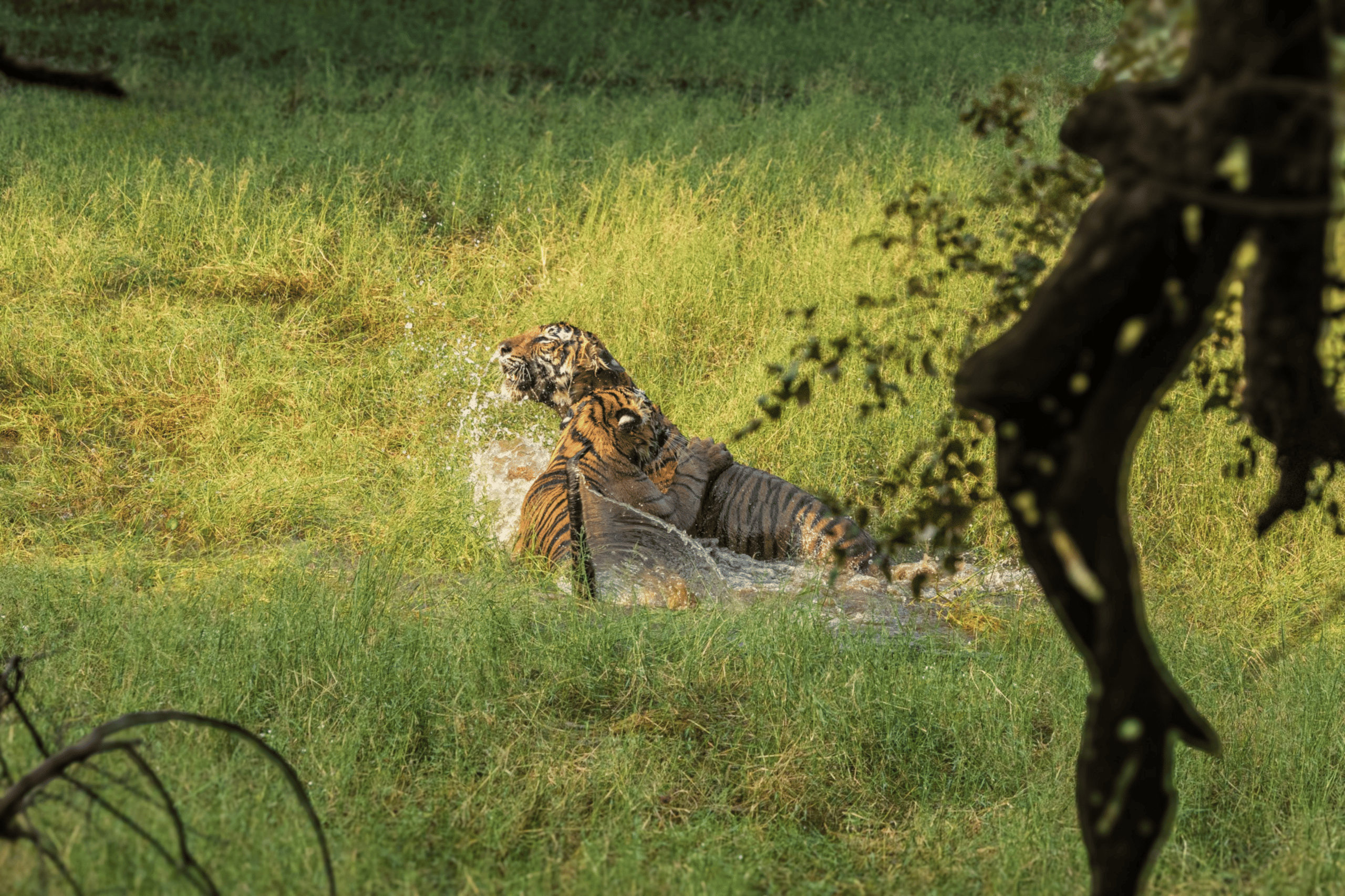
- Fact 1: Ranthambore is one of India’s best places to observe wild Bengal tigers hunting and raising cubs in daylight.
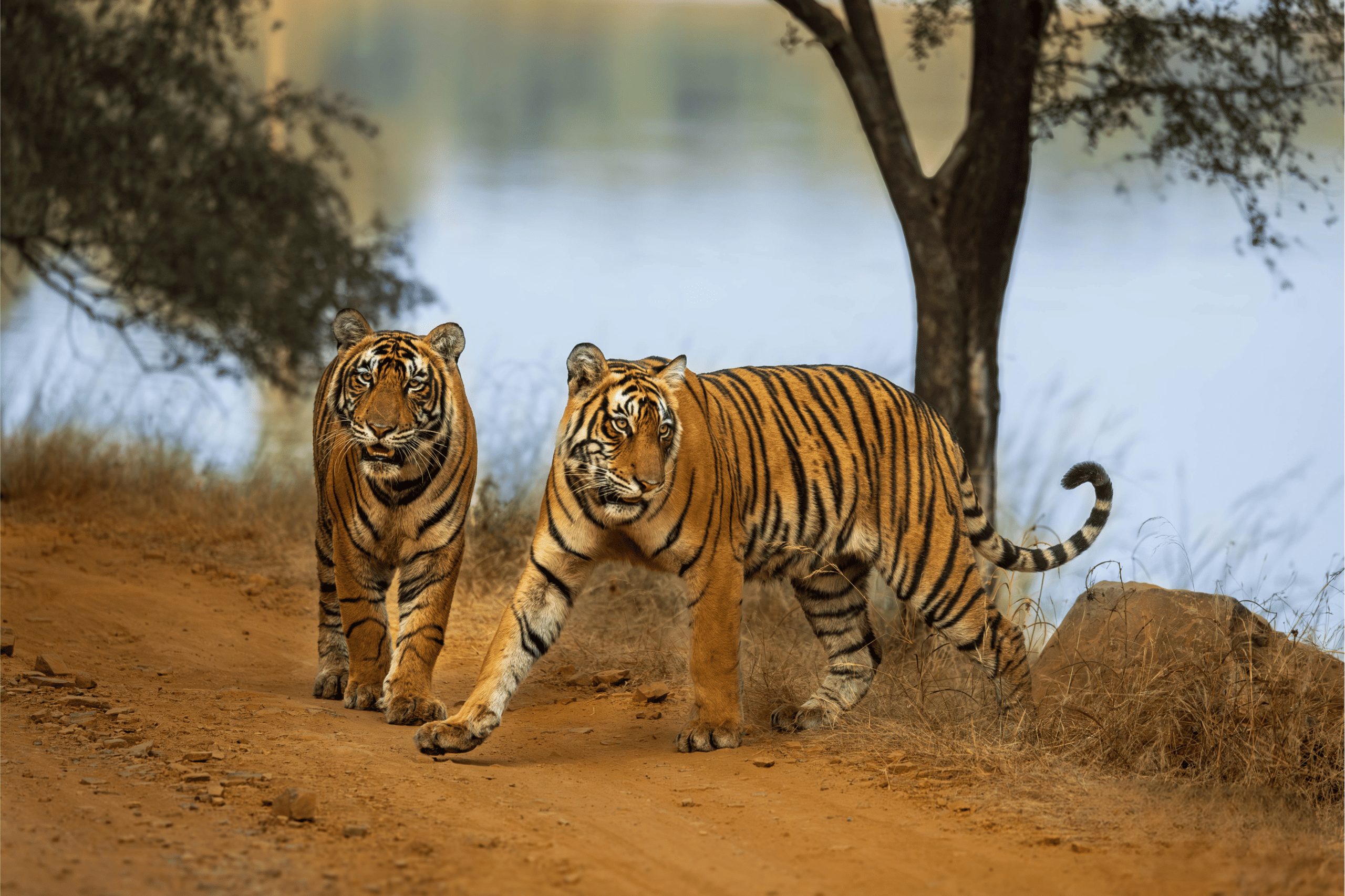
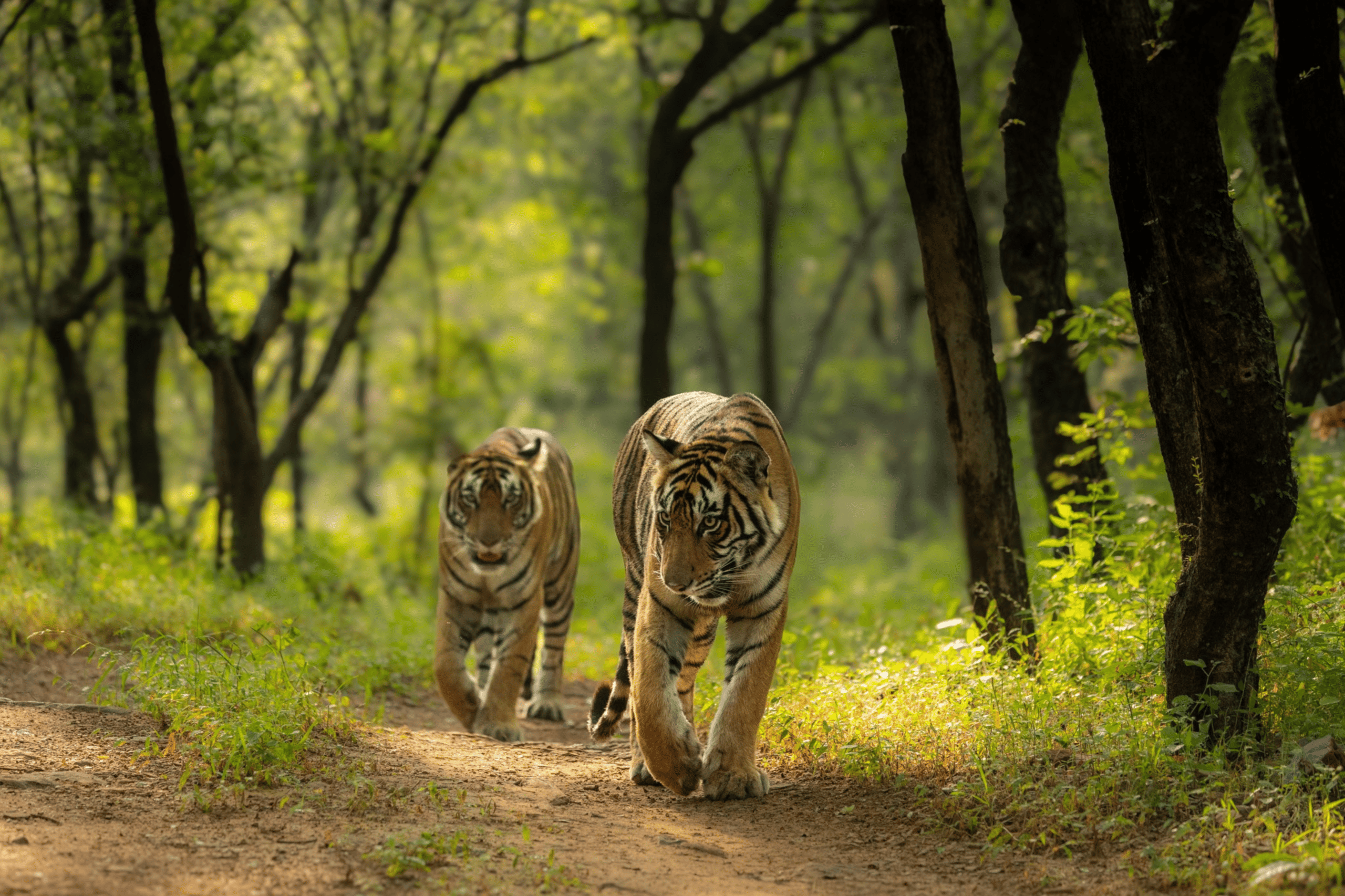
- Fact 2: Individual tigers are identified by unique stripe patterns, and Ranthambore’s habituated tigers often move calmly past safari vehicles.
- Fact 3: As an apex predator, the tiger primarily hunts sambar and chital, keeping herbivore populations in balance across the reserve.
- Fact 4: Ranthambore is a Project Tiger reserve, and its tiger population has become a key source for reintroduction programmes elsewhere in India.
Scientific Name: Panthera pardus fusca
- Fact 1: The Indian leopard is a powerful, adaptable cat that survives on the rocky fringes of Ranthambore, often overshadowed by resident tigers.
- Fact 2: Leopards favour the park’s boulder-strewn hills and cliff edges, habitats that larger tigers tend to avoid.
- Fact 3: A largely nocturnal hunter, it preys on langurs, small deer, and peafowl, dragging kills onto rocks or trees.
- Fact 4: Competition with tigers keeps Ranthambore’s leopards shy and hard to spot, making sightings a prized moment for visitors.
Scientific Name: Felis chaus
- Fact 1: The jungle cat is a slender, long-legged wild cat far bigger than a domestic cat, with a short bobbed tail.
- Fact 2: It favours the grassy lake margins of Ranthambore, particularly around Padam and Rajbagh, where cover and prey are abundant.
- Fact 3: Rodents, birds, and frogs make up most of its diet, hunted using sharp hearing and a pouncing technique.
- Fact 4: Though still fairly common in Ranthambore, jungle cats are rarely seen because of their shy, largely dusk-to-dawn habits.
Scientific Name: Caracal caracal
- Fact 1: The caracal is a lithe, reddish wildcat named for the long black tufts on its ears, which aid its hearing.
- Fact 2: Ranthambore holds one of India’s most important caracal populations, confirmed through years of camera-trap monitoring by park researchers.
- Fact 3: Famous for leaping several feet into the air, the caracal can knock low-flying birds out of the sky.
- Fact 4: It is protected at the same legal level as the tiger in India, reflecting how rare and threatened the species has become.
Scientific Name: Prionailurus rubiginosus
- Fact 1: One of the smallest wild cats in the world, the rusty-spotted cat is barely larger than a house cat.
- Fact 2: Its short, greyish coat is marked with rust-coloured spots that provide camouflage in dry scrub and grassland.
- Fact 3: It hunts rodents, insects, and small birds at night, relying on stealth rather than speed to secure prey.
- Fact 4: Sightings in Ranthambore are extremely rare, and camera-trap records here rank among the species’ most valuable in Rajasthan.
Scientific Name: Rusa unicolor
- Fact 1: The sambar is India’s largest deer species, and Ranthambore’s population is considered the preferred prey of its resident tigers.
- Fact 2: Males carry thick, three-tined antlers and often wade into Ranthambore’s lakes to feed on aquatic plants.
- Fact 3: Sambar are mainly browsers, feeding on leaves, fruit, and grasses, and give sharp alarm calls when predators approach.
- Fact 4: Padam Lake is one of the best places in Ranthambore to watch sambar feeding in open water.
Scientific Name: Axis axis
- Fact 1: Chital, or spotted deer, are recognised by their reddish coats covered in permanent white spots year-round.
- Fact 2: They live in large mixed herds across Ranthambore’s grasslands, often grazing alongside langurs for mutual predator warning.
- Fact 3: Grasses and fallen fruit form the bulk of their diet, and they are the most numerous prey species in the park.
- Fact 4: Their abundance in Ranthambore makes them a reliable indicator species for tracking predator activity nearby.
Scientific Name: Boselaphus tragocamelus
- Fact 1: The nilgai, or blue bull, is Asia’s largest antelope, with males developing a distinctive blue-grey coat.
- Fact 2: It prefers open scrub and grassland at the drier edges of Ranthambore, often seen alone or in small groups.
- Fact 3: As a mixed grazer and browser, the nilgai can survive on coarse vegetation unsuitable for many other herbivores.
- Fact 4: Its size and speed make adult nilgai a difficult target for Ranthambore’s tigers, so calves face the greatest risk.
Scientific Name: Gazella bennettii
- Fact 1: The chinkara, or Indian gazelle, is a small, delicate antelope built for speed across open, arid terrain.
- Fact 2: It favours Ranthambore’s driest, most open scrubland, areas that better suit its desert-adapted physiology.
- Fact 3: Chinkara can survive long periods without drinking water, obtaining much of their moisture from desert vegetation.
- Fact 4: Its preference for arid habitat means chinkara sightings are more likely on Ranthambore’s peripheral routes than near the lakes.
Scientific Name: Melursus ursinus
- Fact 1: The sloth bear has a shaggy black coat, a pale snout, and long curved claws built for digging.
- Fact 2: It is most active at dawn, dusk, and night, and mothers are often seen carrying cubs on their backs.
- Fact 3: Termites and ants form a major part of its diet, sucked up through a gap left by missing front teeth.
- Fact 4: Sloth bear sightings are frequent by Indian park standards, making Ranthambore one of the best places to see the species.
Scientific Name: Sus scrofa
- Fact 1: The wild boar is a stocky, bristly-coated mammal with prominent tusks used for digging and defence.
- Fact 2: It travels in family groups called sounders and roots through soil and leaf litter searching for food.
- Fact 3: An opportunistic omnivore, it eats roots, fruit, insects, and carrion, adapting its diet to whatever is seasonally available.
- Fact 4: Wild boar are common throughout Ranthambore and serve as an important prey species for the park’s tigers and leopards.
Scientific Name: Semnopithecus entellus
- Fact 1: The Hanuman langur is a long-limbed, silver-grey monkey with a black face, considered sacred in Hindu tradition.
- Fact 2: It lives in large troops across Ranthambore’s forests and is often seen foraging alongside sambar and chital herds.
- Fact 3: A leaf-eating primate, it also feeds on fruit and flowers, dropping food that ground-feeding deer readily scavenge.
- Fact 4: Its sharp alarm calls frequently alert safari guides in Ranthambore to the presence of a nearby tiger or leopard.
Scientific Name: Macaca mulatta
- Fact 1: The rhesus macaque is a stocky, pinkish-faced monkey known for its intelligence and highly social troop structure.
- Fact 2: It is commonly seen around Ranthambore Fort and the park’s temples, where troops move confidently among visitors.
- Fact 3: An adaptable omnivore, it eats fruit, seeds, insects, and scraps, switching diet readily based on availability.
- Fact 4: Macaque troops in and around the fort have grown accustomed to humans, unlike the more forest-bound langurs.
Scientific Name: Canis aureus
- Fact 1: The golden jackal is a slender, fox-like canid with a tawny coat that pairs for life.
- Fact 2: It moves through Ranthambore’s grasslands in pairs or small family groups, often trailing tiger and leopard kills.
- Fact 3: An opportunistic feeder, it scavenges carcasses but also actively hunts rodents, birds, and insects on its own.
- Fact 4: Jackals are frequently seen at dawn near recent kills, making them a useful sign that a predator is close by.
Scientific Name: Hyaena hyaena
- Fact 1: The striped hyena is a shy, dog-sized scavenger with a coarse grey coat marked by dark vertical stripes.
- Fact 2: It is strictly nocturnal in Ranthambore, retreating to caves or dense scrub well before sunrise.
- Fact 3: Powerful jaws let it crack open bones that other scavengers cannot access, extracting marrow other species leave behind.
- Fact 4: Occasional early-morning sightings near Ranthambore’s rocky terrain make the striped hyena one of the park’s most sought-after scavengers.
REPTILES
Ranthambore’s rocky terrain, lakes, and dry forest support around 35 recorded reptile species, from basking mugger crocodiles to venomous snakes and quick-moving lizards. Though less conspicuous than the park’s mammals, the reptiles of Ranthambore play essential roles as predators, prey, and indicators of a healthy ecosystem, and patient visitors regularly encounter them sunning themselves along the lake edges and forest tracks of Ranthambore National Park.
Scientific Name: Crocodylus palustris
- Fact 1: The mugger crocodile is a broad-snouted freshwater species that can grow to around four metres in length.
- Fact 2: It favours the shallow, still waters of Ranthambore’s lakes, often seen basking motionless on muddy banks.
- Fact 3: An ambush predator, it lies submerged and lunges at fish, birds, and unwary mammals that approach the water’s edge.
- Fact 4: Ranthambore’s lakes support a healthy mugger population, making crocodile sightings almost guaranteed on any lakeside safari route.
Scientific Name: Python molurus
- Fact 1: The Indian rock python is one of the largest snakes in India, capable of growing beyond four metres long.
- Fact 2: It is a powerful constrictor that favours rocky crevices and dense cover near Ranthambore’s lakes and streams.
- Fact 3: Rather than venom, it kills by constriction, subduing prey as large as deer fawns before swallowing them whole.
- Fact 4: Pythons are non-venomous and protected under Indian law, and Ranthambore’s rocky terrain provides ideal denning habitat for the species.
Scientific Name: Naja naja
- Fact 1: The spectacled cobra is instantly recognisable by the distinctive eyeglass-shaped marking on the back of its raised hood.
- Fact 2: It shelters in rock crevices, termite mounds, and abandoned burrows across Ranthambore’s dry deciduous forest.
- Fact 3: A potent neurotoxic venom allows it to subdue rodents, frogs, and other snakes efficiently once bitten.
- Fact 4: As one of India’s “big four” venomous snakes, it is treated with particular caution by Ranthambore’s forest staff and guides.
Scientific Name: Bungarus caeruleus
- Fact 1: The common krait is a slender, glossy black snake marked with narrow white crossbands along its body.
- Fact 2: It is almost entirely nocturnal, resting by day in rodent burrows or leaf litter within Ranthambore’s forest floor.
- Fact 3: Its venom is highly neurotoxic, and it feeds mainly on other snakes, including venomous species larger than itself.
- Fact 4: Because it is docile by day and active at night, krait encounters in Ranthambore are far less common than cobra sightings.
Scientific Name: Daboia russelii
- Fact 1: Russell’s viper is a heavy-bodied snake with a striking pattern of dark, chain-like blotches along its back.
- Fact 2: It favours open scrub and agricultural fringes around Ranthambore rather than dense forest interior.
- Fact 3: This viper feeds on rodents and delivers a painful bite through long, hinged fangs and haemotoxic venom.
- Fact 4: It is classed among India’s “big four” venomous snakes, responsible for a significant share of snakebite cases nationwide.
Scientific Name: Ptyas mucosa
- Fact 1: The Indian rat snake is a long, fast-moving, non-venomous snake often mistaken for a cobra when alarmed.
Fact 2: It is active by day and frequently seen crossing open ground near Ranthambore’s forest edges and villages.
Fact 3: A skilled rodent hunter, it also preys on frogs and birds, making it valuable for controlling pest populations.
Fact 4: Despite being harmless, it is often killed out of fear near villages bordering Ranthambore, threatening local populations.
Fact 1: The trinket snake is a slender, non-venomous species with a chain-like pattern of dark markings on its back.
Fact 2: It favours rocky ground and scrub cover, often sheltering under stones within Ranthambore’s forest habitat.
Fact 3: Rodents and small birds make up its main diet, which it subdues by constriction rather than venom.
Fact 4: Though harmless to humans, it can vibrate its tail and strike defensively when it feels threatened.
Scientific Name: Eryx conicus
- Fact 1: The common sand boa is a short, thick-bodied snake with a blunt tail that resembles its head.
- Fact 2: It spends most of its time burrowed in loose soil and sand, emerging mainly to ambush prey.
- Fact 3: Lying just beneath the surface, it grabs rodents and lizards that pass within striking range.
- Fact 4: Its secretive, burrowing lifestyle makes the sand boa one of Ranthambore’s least frequently observed snake species.
Scientific Name: Varanus bengalensis
- Fact 1: The Bengal monitor is a large, powerful lizard that can grow over a metre long, with a forked tongue.
- Fact 2: It digs deep burrows in Ranthambore’s open ground and climbs trees skilfully when threatened.
- Fact 3: An opportunistic predator, it eats insects, eggs, small mammals, and carrion using a strong sense of smell.
- Fact 4: Bengal monitors are common across Ranthambore and are frequently seen basking along forest tracks in the morning sun.
Scientific Name: Chamaeleo zeylanicus
- Fact 1: The Indian chameleon is a slow-moving, tree-dwelling lizard famous for its ability to shift skin colour.
- Fact 2: It grips branches with pincer-like feet and a prehensile tail, swaying gently to mimic leaves in the wind.
- Fact 3: A long, sticky tongue shoots out to catch insects at a distance, aided by independently rotating eyes.
- Fact 4: Field surveys have confirmed the Indian chameleon’s presence within Ranthambore’s scrub and dry deciduous forest habitat.
Scientific Name: Calotes versicolor
- Fact 1: The oriental garden lizard is a common, long-tailed lizard that flushes bright orange-red around the head when breeding.
- Fact 2: It perches on shrubs, walls, and low branches throughout Ranthambore, often doing rapid push-up displays.
- Fact 3: It feeds mainly on insects, ambushing prey with a quick lunge before returning to its perch.
- Fact 4: Its adaptability to disturbed and forested habitat alike makes it one of Ranthambore’s most frequently seen reptiles.
Scientific Name: Sitana ponticeriana
- Fact 1: The fan-throated lizard is a small, ground-dwelling species named for the colourful dewlap males flash to attract mates.
- Fact 2: It favours open, sandy, sparsely vegetated ground at the drier margins of Ranthambore National Park.
- Fact 3: Quick and alert, it feeds on small insects and relies on speed to escape predators.
- Fact 4: Males become especially conspicuous during the breeding season, when their throat fans turn a vivid blue and orange.
Scientific Name: Eutropis carinata
- Fact 1: The common skink is a small, smooth-scaled lizard with a glossy, keeled body built for quick movement.
- Fact 2: It forages among leaf litter and low grass across Ranthambore, rarely straying far from ground cover.
- Fact 3: Insects and small invertebrates make up its diet, which it hunts using quick, darting movements.
- Fact 4: Its small size and secretive habits mean the common skink is far more often heard rustling than actually seen.
Birds
With over 270 recorded species, Ranthambore ranks among India’s premier birdwatching destinations, rivalling its reputation for tigers. Raptors patrol the skies above the fort, storks and herons wade through lake shallows, kingfishers flash along the water’s edge, and vividly coloured species animate the forest canopy. This exceptional variety among the birds of Ranthambore reflects the park’s mix of wetland, grassland, and dry deciduous habitats within a single reserve.
Scientific Name: Spilornis cheela
- Fact 1: The crested serpent eagle is a broad-winged raptor named for its diet and the fan-like crest on its head.
- Fact 2: It perches conspicuously in tall trees across Ranthambore, scanning the ground below for movement.
- Fact 3: True to its name, it specialises in hunting snakes, along with lizards, frogs, and small mammals.
- Fact 4: Its loud, distinctive call is one of the most recognisable raptor sounds heard across Ranthambore’s forests.
Scientific Name: Nisaetus cirrhatus
- Fact 1: The changeable hawk-eagle is a large, crested raptor with plumage that varies noticeably between individuals.
- Fact 2: It hunts from the forest canopy across Ranthambore, using dense cover to launch surprise attacks on prey.
- Fact 3: Its diet includes birds, reptiles, and small mammals, captured with powerful talons after a swift aerial strike.
- Fact 4: Sightings of this eagle perched motionless above the canopy are a highlight for birdwatchers visiting Ranthambore.
Scientific Name: Ketupa zeylonensis
- Fact 1: The brown fish owl is a large, tufted owl with bright yellow eyes adapted for hunting near water.
- Fact 2: It roosts in dense trees along Ranthambore’s lakeshores by day, becoming active as dusk falls.
- Fact 3: Unlike most owls, it hunts fish and crustaceans, snatching prey directly from the water’s surface.
- Fact 4: Ranthambore’s lakeside forests provide ideal roosting and hunting habitat for this striking nocturnal predator.
Scientific Name: Bubo bengalensis
- Fact 1: The Indian eagle-owl is a large, powerful owl with prominent ear-tufts and deep orange eyes.
- Fact 2: It favours Ranthambore’s rocky cliffs and ravines, where its mottled plumage blends into the terrain.
- Fact 3: A formidable nocturnal hunter, it takes prey as large as hares and other birds using silent flight.
- Fact 4: Its haunting call, often heard near Ranthambore Fort at dusk, is one of the park’s most atmospheric sounds.
Scientific Name: Mycteria leucocephala
- Fact 1: The painted stork is a tall wading bird with a curved yellow bill and pink-tinged wing feathers.
- Fact 2: It wades through Ranthambore’s shallow lake margins, sweeping its bill side to side to locate prey.
- Fact 3: Fish form the bulk of its diet, detected mainly by touch rather than sight in murky water.
- Fact 4: Painted storks often nest colonially in tall trees near Ranthambore’s lakes during the breeding season.
Scientific Name: Ephippiorhynchus asiaticus
- Fact 1: The black-necked stork is a tall, striking bird with a glossy black neck and a heavy black bill.
- Fact 2: Unlike many storks, it is usually seen alone or in pairs, wading through Ranthambore’s open wetlands.
- Fact 3: It hunts fish, frogs, and small reptiles, striking with precision using its long, powerful bill.
- Fact 4: Considered uncommon across India, sightings of this stork in Ranthambore are a notable record for birdwatchers.
Scientific Name: Ardea cinerea
- Fact 1: The grey heron is a tall, slender wading bird with pale grey plumage and a dagger-like bill.
- Fact 2: It stands motionless at the water’s edge across Ranthambore’s lakes, waiting patiently for prey to approach.
- Fact 3: Fish and amphibians are its primary prey, seized with a rapid, precise strike of the bill.
- Fact 4: Grey herons are among the most consistently seen water birds on Ranthambore’s lake safari routes.
Scientific Name: Halcyon smyrnensis
- Fact 1: The white-throated kingfisher is a brightly coloured bird with a turquoise back and a bright red bill.
- Fact 2: It perches on wires, branches, and rocks across Ranthambore, far beyond just the park’s water bodies.
- Fact 3: Despite its name, it eats far more insects, lizards, and rodents than fish, hunted from an open perch.
- Fact 4: Its loud, laughing call is one of the most frequently heard bird sounds throughout Ranthambore.
Scientific Name: Ceryle rudis
- Fact 1: The pied kingfisher is a black-and-white bird known for hovering in place before diving for fish.
- Fact 2: It hunts over Ranthambore’s open lake water, often hovering ten metres or more above the surface.
- Fact 3: Fish are caught in a sharp, vertical dive, gripped firmly by a heavy, dagger-shaped bill.
- Fact 4: Its distinctive hovering flight makes the pied kingfisher easy to identify on any Ranthambore lake safari.
You might also like....




Discover Our World




Crafted for Explorers
Why Ranthambore Looks So Different From Other Tiger Reserves