
Ranthambore Safari Timings: Morning vs Afternoon Safari – Which Is Better?
Ranthambore safari timings, Ranthambore morning safari, Ranthambore afternoon safari, morning vs afternoon safari Ranthambore, Ranthambore tiger safari timings, best time for Ranthambore safari, Ranthambore safari time, Ranthambore National Park safari
Ranthambore Safari Timings: Morning vs Afternoon Safari
Planning a Ranthambore tiger safari and wondering whether you should choose a morning safari or an afternoon safari?
You’re not alone.
One of the most common questions travellers ask before visiting Ranthambore is:
“What are the best Ranthambore safari timings?”
Ranthambore National Park operates safari drives in designated morning and afternoon/evening shifts. The exact reporting and entry times vary according to the season because daylight hours change throughout the year. The official Rajasthan Forest Department’s safari booking system also provides separate availability for morning and afternoon shifts. (fmdss.forest.rajasthan.gov.in)
This means that there isn’t one fixed safari time that applies throughout the year.
So, which is better?
Morning or afternoon?
The answer is dependent on the type of safari experience you desire.
Let’s compare both.
What Are the Ranthambore Safari Timings?
Ranthambore safaris are generally divided into two main shifts:
🌅 Morning Safari
The morning safari begins early, with the exact timing changing according to the season and daylight hours.
🌇 Afternoon Safari
The afternoon safari begins later in the day and continues toward the evening, again depending on the seasonal schedule.
The official booking system displays the available safari shifts for a selected date, so travellers should always check the current schedule when booking, rather than a fixed time found on an old website or blog. (fmdss.forest.rajasthan.gov.in)
Important: Safari timings can change seasonally. Your confirmed permit and the current official booking information should be considered as the final reference.
Why Do Ranthambore Safari Timings Change?
Ranthambore’s safari schedule follows seasonal daylight conditions.
The forest cannot operate visitor drives at exactly the same times throughout the year because sunrise and sunset change across the seasons.
This is why you will often find different safari reporting and entry times depending on your travel date.
If you are planning your trip months in advance, don’t assume that a safari timing you see online for one month will be identical for another month.
Morning Safari in Ranthambore
For many wildlife enthusiasts, the morning safari in Ranthambore is a favourite.
There is something special about entering the forest shortly after sunrise.
The temperature is generally more comfortable during the early part of the day and the changing light can create beautiful conditions for wildlife photography.
Rajasthan Tourism’s own suggested Ranthambore itinerary describes game drives as taking place early in the morning and later in the day, noting that these cooler periods can be favourable for animal activity.
Why Choose a Morning Ranthambore Safari?
Cooler Forest Conditions
Morning temperatures can be more comfortable than the hotter parts of the day, especially during warmer months.
This can make a long safari drive more enjoyable.
Beautiful Morning Light
For photographers, early light can create a completely different atmosphere.
You may see:
Golden light through trees
Misty-looking landscapes during suitable conditions
Deer moving through open areas
Birds becoming active
Long shadows across the forest
Even without a tiger sighting, the morning landscape can be spectacular.
Active Wildlife
Many animals are active during the cooler parts of the day.
You may encounter sambar deer, chital, langurs, birds and other wildlife while moving through the forest.
A Quiet Start to the Day
There is something uniquely exciting about entering Ranthambore while the forest is waking up.
The sounds of birds, distant alarm calls and the movement of wildlife can make the experience memorable.
Is Morning Safari Better for Tiger Sightings?
This is where you need to be careful with online safari advice.
You will often see claims such as:
“Morning safari guarantees tiger sightings.”
It doesn’t.
A tiger is a wild animal and its location cannot be predicted with certainty.
Morning conditions may be favourable for wildlife activity, but that doesn’t mean a tiger will appear during every morning safari.
Rajasthan Tourism itself describes tiger sightings as something visitors may experience if they are lucky, rather than something guaranteed. (Rajasthan Tourism)
So if someone promises you a guaranteed tiger because you booked the morning shift, be cautious.
Afternoon Safari in Ranthambore
The afternoon Ranthambore safari offers a completely different atmosphere.
As the day progresses, the forest changes.
The light becomes warmer, shadows become longer and temperatures begin to drop toward evening.
For photographers, the late-afternoon light can be particularly attractive.
Why Choose an Afternoon Safari?
- Beautiful Evening Light
The later part of the safari can provide excellent natural light for photography.
The combination of:
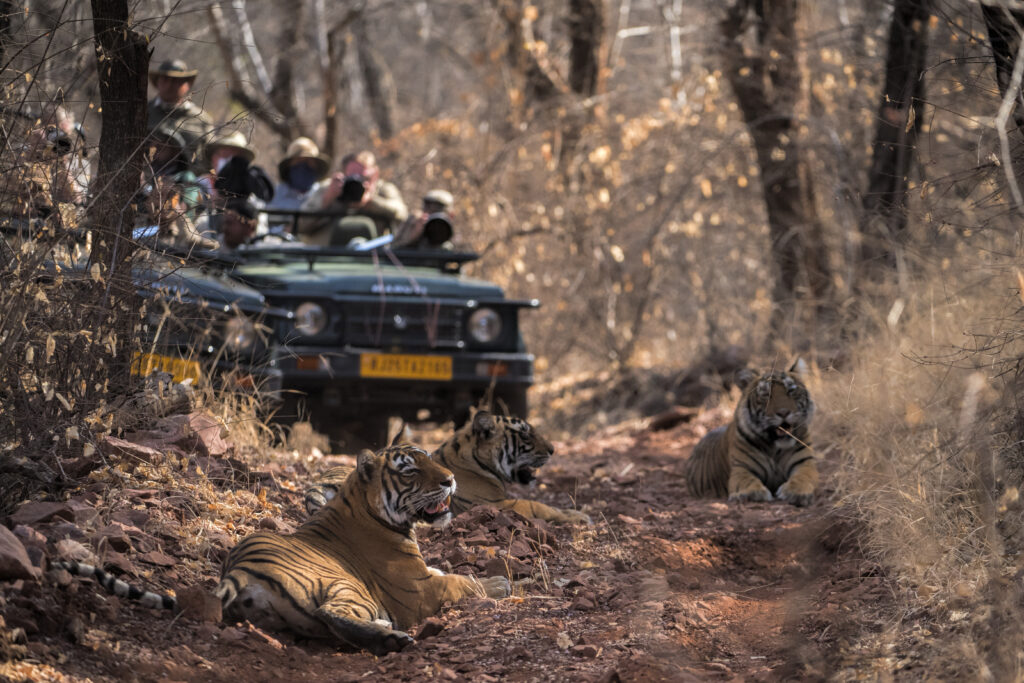
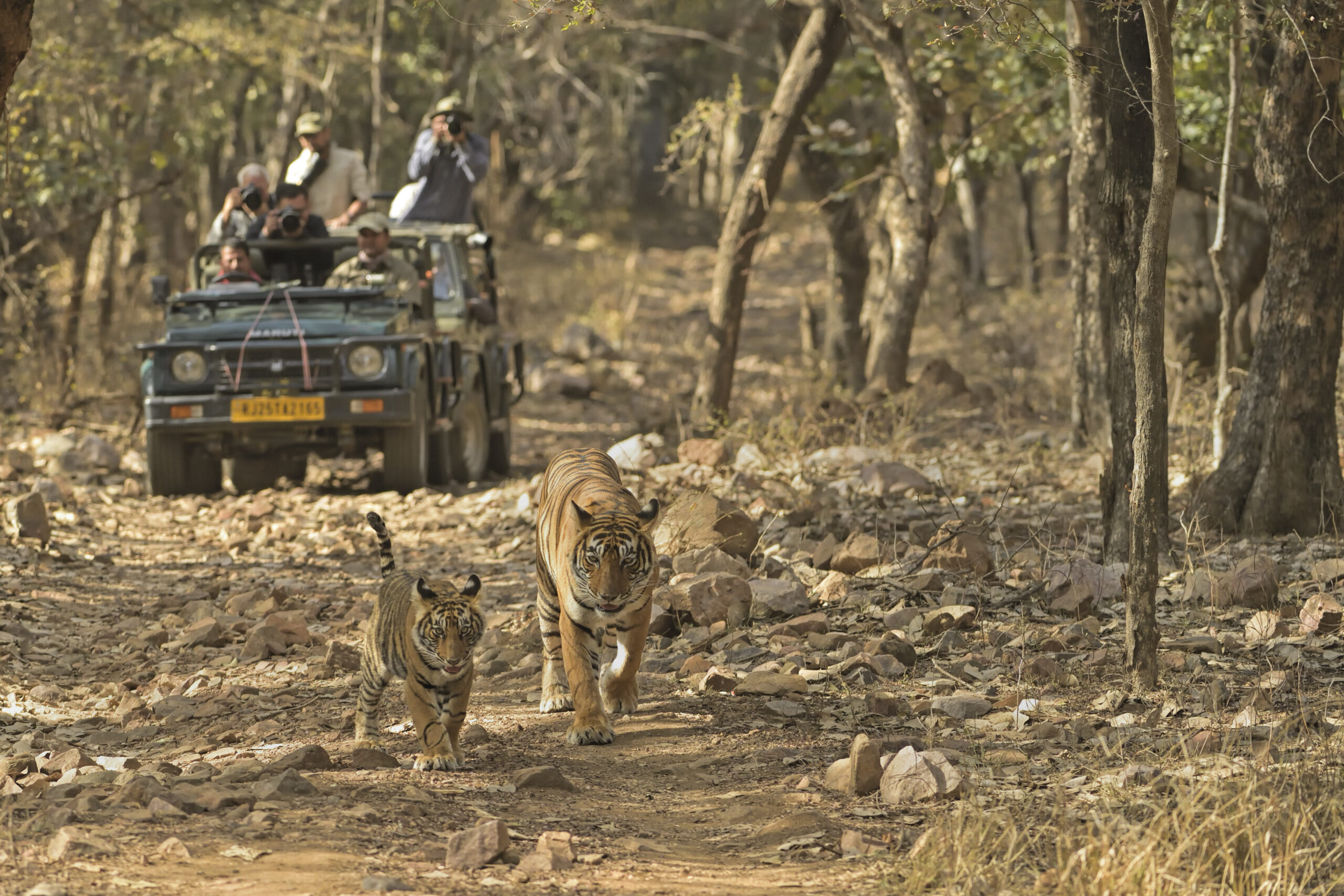
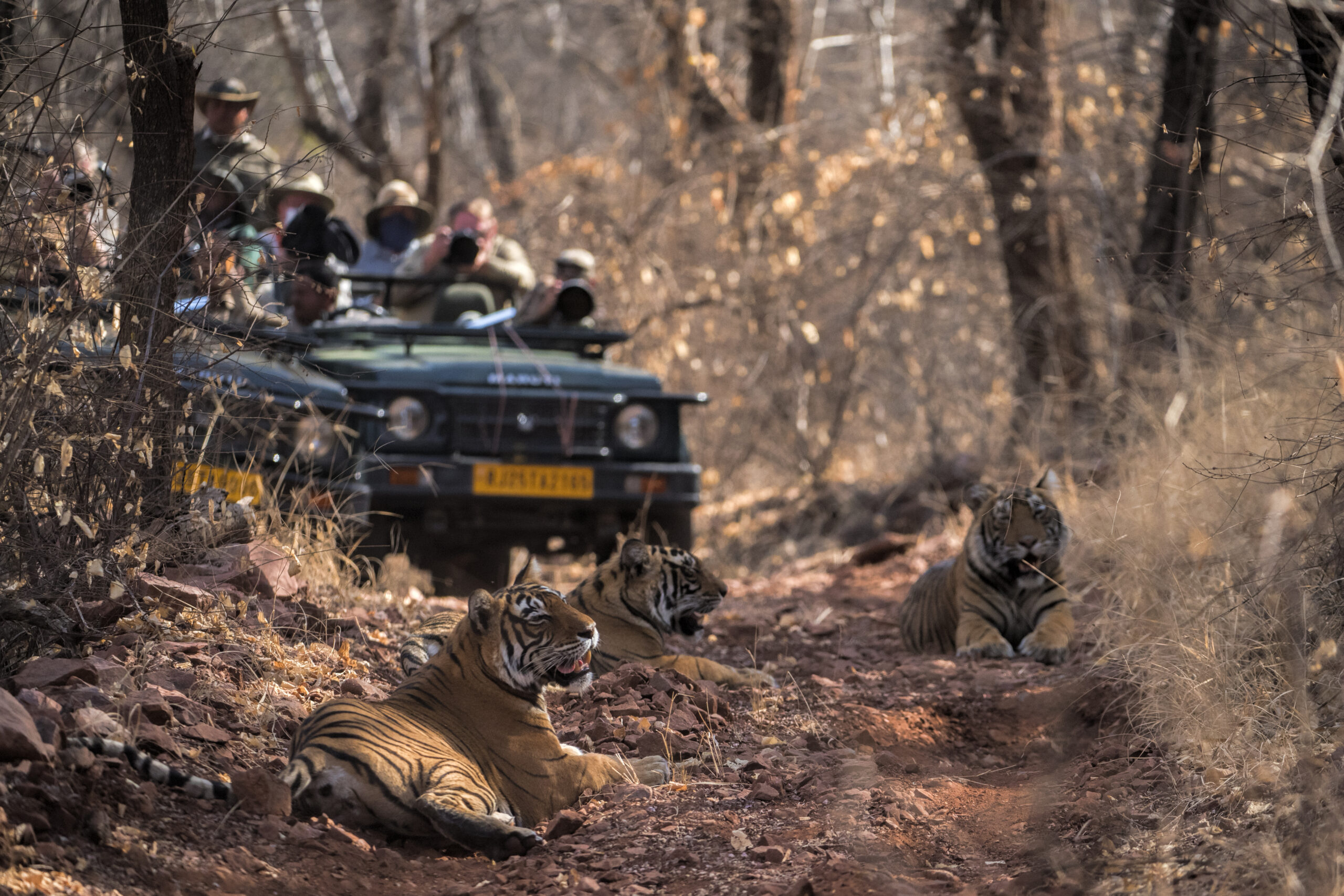
Tiger + dry forest + golden sunlight
is one of the classic visual experiences associated with wildlife photography in Rajasthan.
Of course, getting that photograph depends entirely on wildlife movement and luck.
- Cooler Toward the End
During warmer periods, the beginning of an afternoon safari can be hotter.
However, conditions generally become more comfortable as the day moves toward evening.
- Different Wildlife Behaviour
Wildlife behaviour can change throughout the day.
An animal that wasn’t visible during your morning drive may be active later.
This is another reason experienced wildlife travellers often prefer taking more than one safari rather than trying to decide which single shift is “best.”
Morning vs Afternoon Safari in Ranthambore
Here’s a quick comparison:
Feature
- Morning Safari
- Early morning
- Temperature- Usually cooler initially
- Light- Soft morning light
- Photography- Excellent for sunrise-style lighting
- Wildlife- Potentially active during cooler hours
- Experience- Quiet, fresh forest atmosphere
- Tiger sighting- Never guaranteed
- Best for- Early risers & photographer.
2 Afternoon Safrai-
- Start- Later in the day
- Temperature- Can be warmer initially
- Light- Warm evening light
- Photography- Excellent for golden-hour conditions
- Wildlife- Activity can increase as temperatures fall
- Experience- Warm light and evening atmosphere
- Tiger sighting- Never guaranteed
- Best for- Travellers who prefer later starts
Morning vs Afternoon: Our Recommendation
If you only have one safari, choose the shift that fits your travel schedule and comfort best.
If you are travelling specifically for tiger photography or serious wildlife watching, consider taking multiple safaris across different shifts.
That way, you’re not depending on a single few-hour window to experience Ranthambore.
And remember:
There is no “wrong” safari timing.
A morning safari can give you a quiet forest waking up.
An afternoon safari can give you golden light and an active evening landscape.
Both can produce unforgettable wildlife moments.
7. How Guides Determine Where a Tiger Might Be
A skilled safari guide does much more than drive around looking for a tiger.
They constantly observe the environment.
They may consider:
Tracks:
Are there fresh pugmarks on the road?
Alarm calls:
Are prey animals repeatedly reacting from the same direction?
Water:
Are there water bodies or streams where animals are likely to gather?
Vegetation:
Is there suitable cover nearby?
Terrain:
Could a tiger be using a particular valley, ridge or rocky area?
Recent observations:
Have there been recent signs of a particular tiger in the area?
No single clue provides the complete answer.
It is the combination of clues that makes wildlife tracking so fascinating.
8. Why Water Sources Matter
Water is an essential part of the ecosystem.
Ranthambore contains lakes and other water bodies that support a wide range of wildlife. Rajasthan Tourism describes the reserve’s landscape as a combination of hills, meadows, lakes and rivulets.
During hotter and drier periods, water can become particularly important to wildlife.
This can create opportunities for observation because several species may visit the same water source.
But a waterhole should never be treated as a guaranteed tiger location.
A tiger may visit a water source, pass through the area or remain hidden somewhere nearby—or it may simply be elsewhere.
9. Understanding Tiger Territory
Tigers are territorial animals.
A territory provides access to important resources such as food, water, shelter and opportunities for reproduction.
The size and boundaries of a tiger’s territory can vary depending on factors such as prey availability, habitat and the presence of other tigers.
Territories can also overlap, particularly between males and females.
This is one reason tiger movements can change over time.
A location where a tiger was frequently seen in one period should not automatically be assumed to be its permanent location.
Wild animals are not following a tourist schedule.
10. Why Tigers Are Sometimes Difficult to Spot
Ranthambore’s relatively open landscapes can make wildlife viewing easier in some areas, but this does not mean tigers are always visible.
Tigers are predators that depend heavily on stealth.
Their striped coats can also provide surprisingly effective camouflage among vegetation, shadows and dry forest.
A tiger can be relatively close to a safari vehicle without immediately being noticed.
This is why patience is one of the most important skills on a wildlife safari.
Sometimes the first clue is not the tiger itself.
It is the sudden silence of the forest.


